Three Days at COTA: 2026 F1 Austin US Grand Prix Weekend
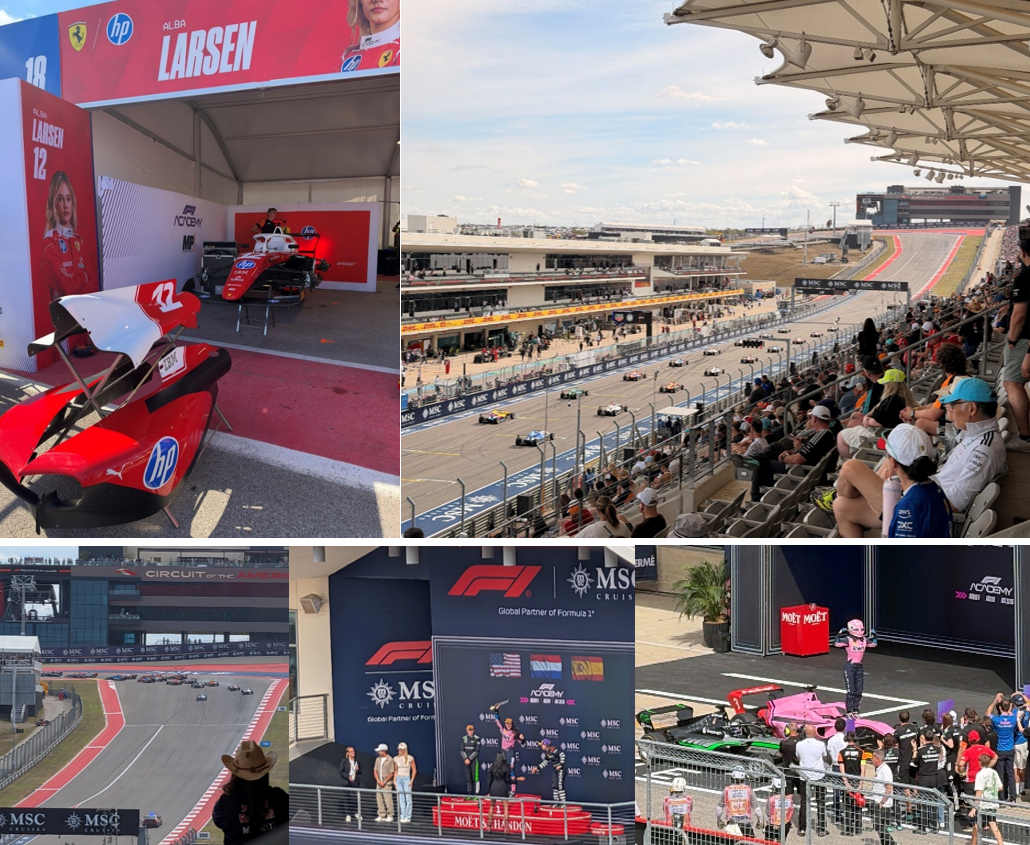
COTA F1 Weekend: What We Watched
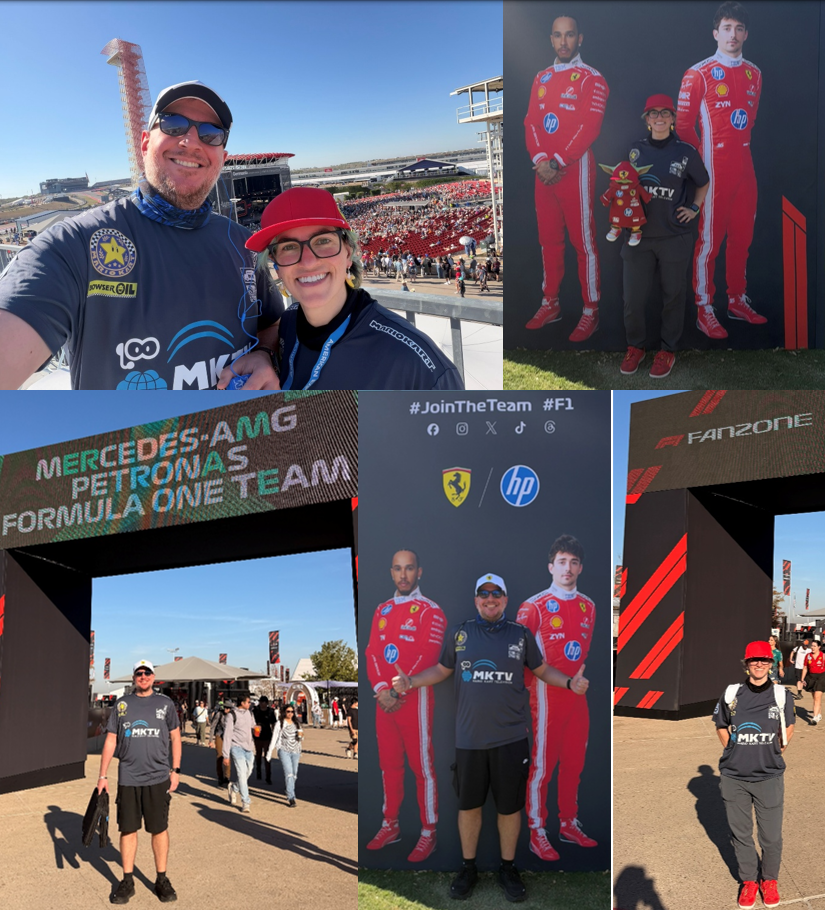
Friday
| Time | Session or Event |
| 9:45 a.m. | Masters Historic practice session |
| 11:00 a.m. | F1 car presentation |
| 11:50 a.m. | MotoGP practice laps |
| 12:30 p.m. | Formula 1 Free Practice 1 (FP1) |
| 2:55 p.m. | Masters Historic qualifying |
| 4:00 p.m. | Formula 1 Free Practice 2 (FP2) |
| 5:50 p.m. | F1 Academy opening race |
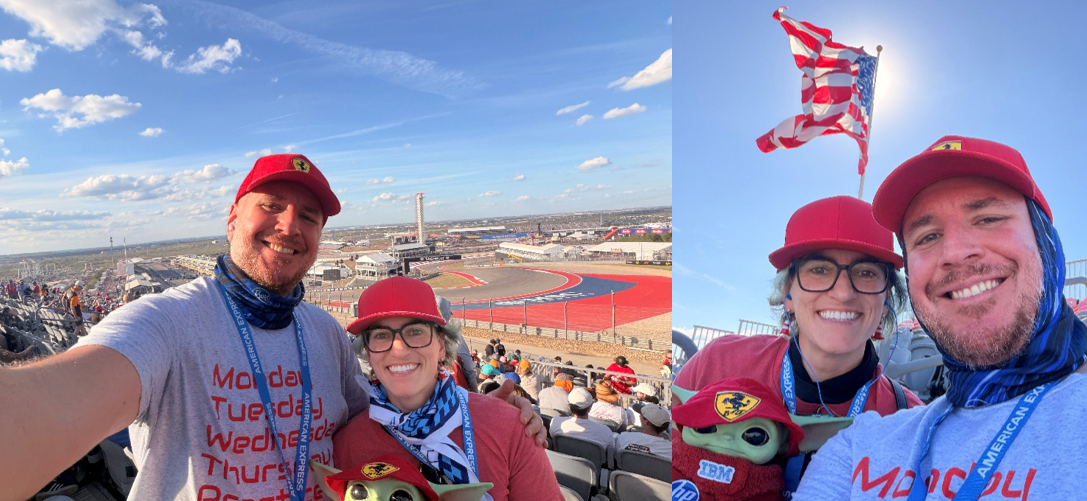
Saturday
| Time | Session or Event |
| 9:10 a.m. | Porsche qualifying |
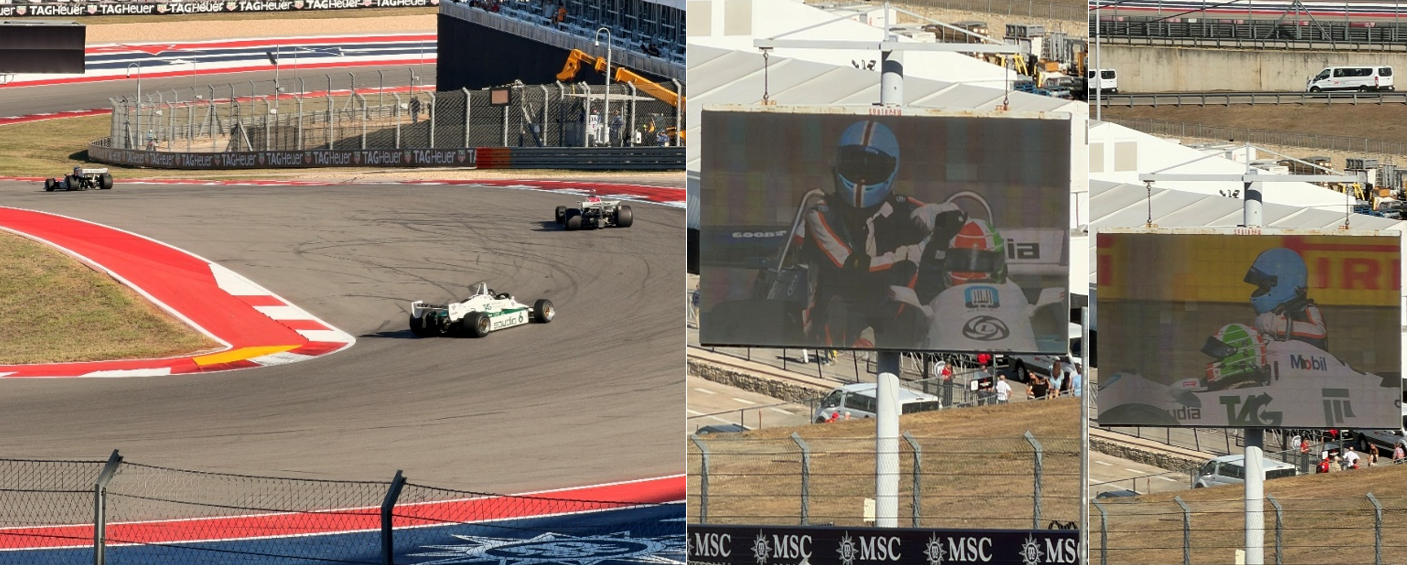
| 10:10 a.m. | Masters Historic race |
| 11:40 a.m. | MotoGP demonstration |
| 12:30 p.m. | Formula 1 Free Practice 3 (FP3) |
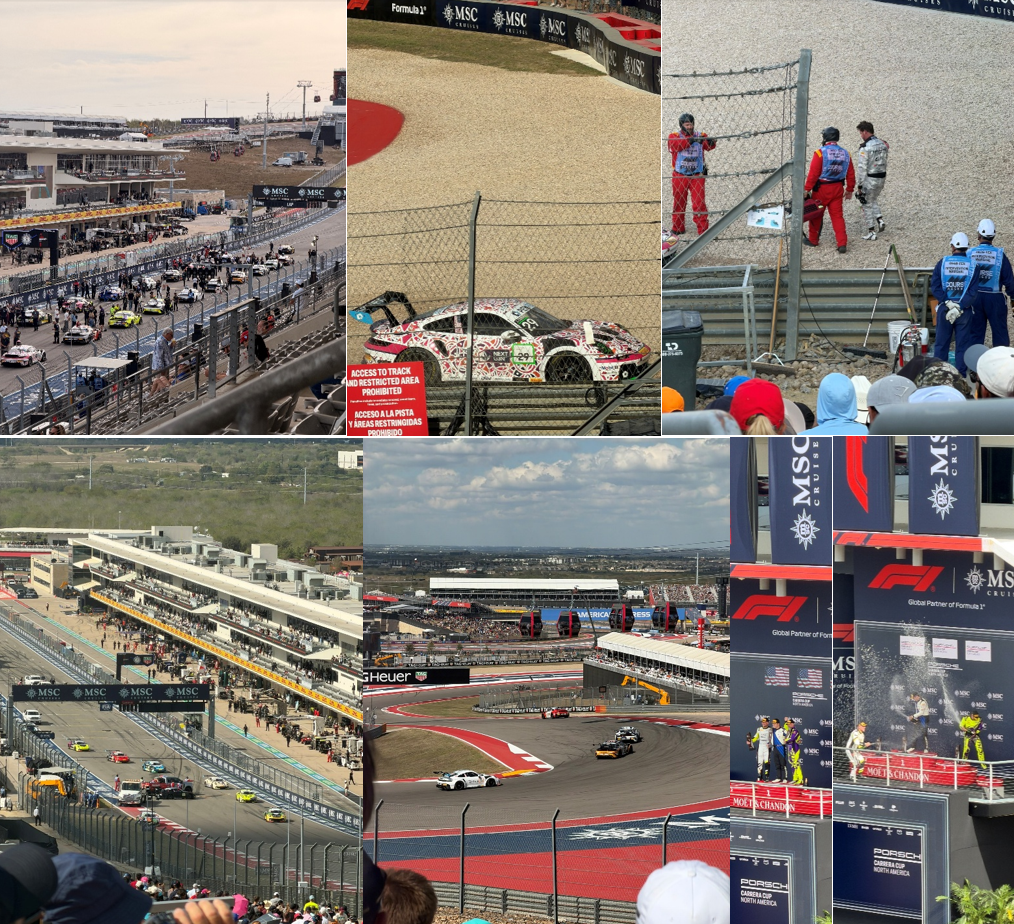
| 2:40 p.m. | Porsche Carrera Cup |
| 4:00 p.m. | Formula 1 qualifying |
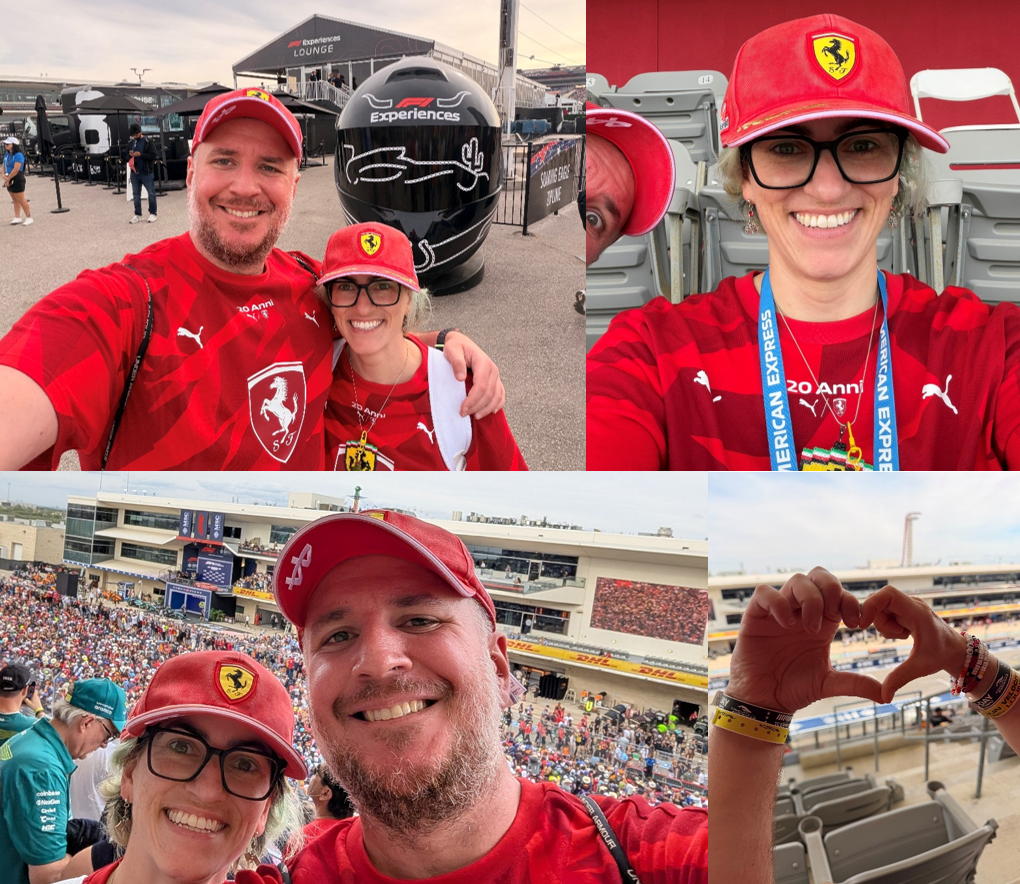
Sunday
| Time | Session or Event |
| 10:40 a.m. | Porsche Carrera Cup |
| 12:00 p.m. | F1 Academy feature race |
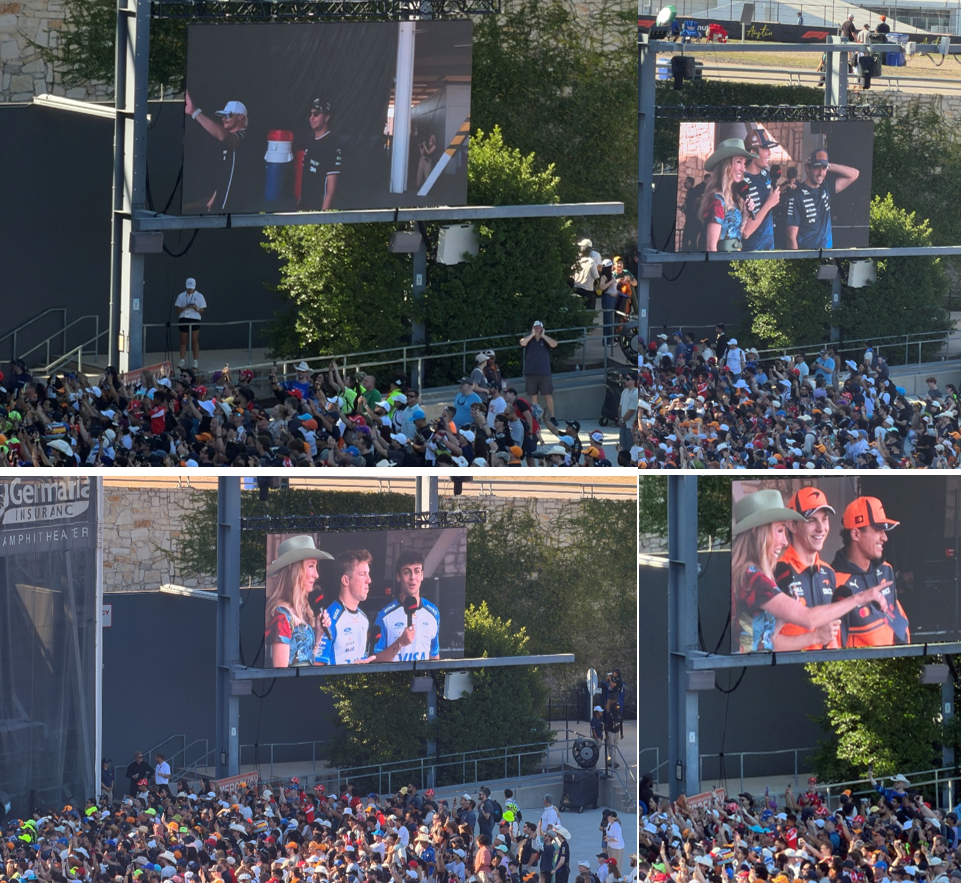
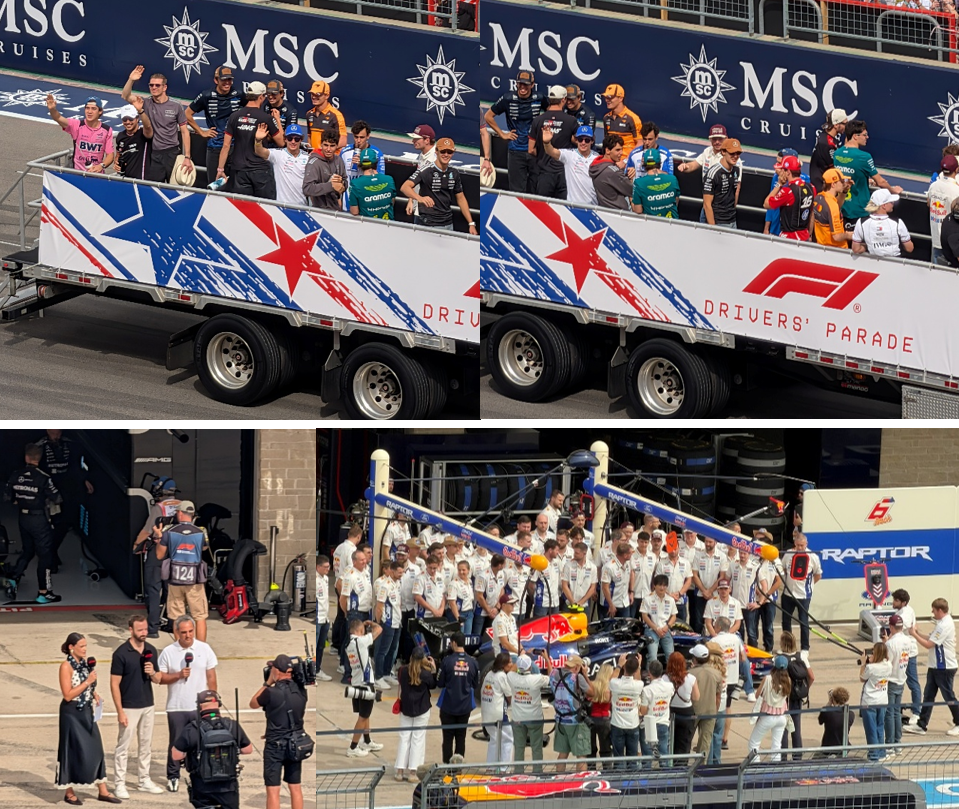
| 1:00 p.m. | F1 driver parade |
| 2:44 p.m. | National anthem |
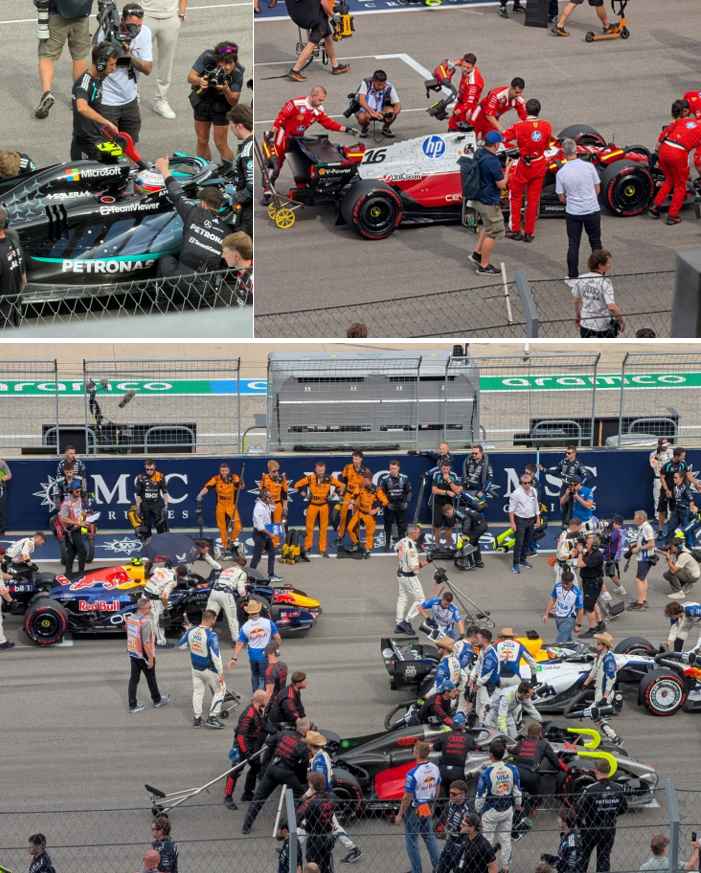
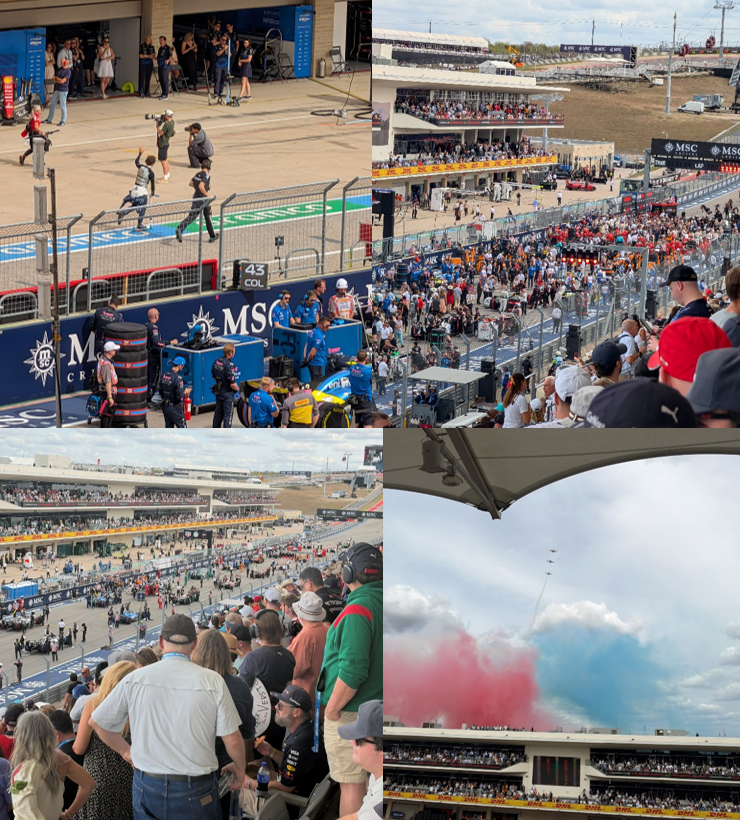
| 3:00 p.m. | Formula 1 Grand Prix |
My top 5:
- Formula 1 Grand Prix (duh)
- F1 driver parade
- Porsche Carrera Cup
- Masters Historic Race
- F1 Academy Feature Race
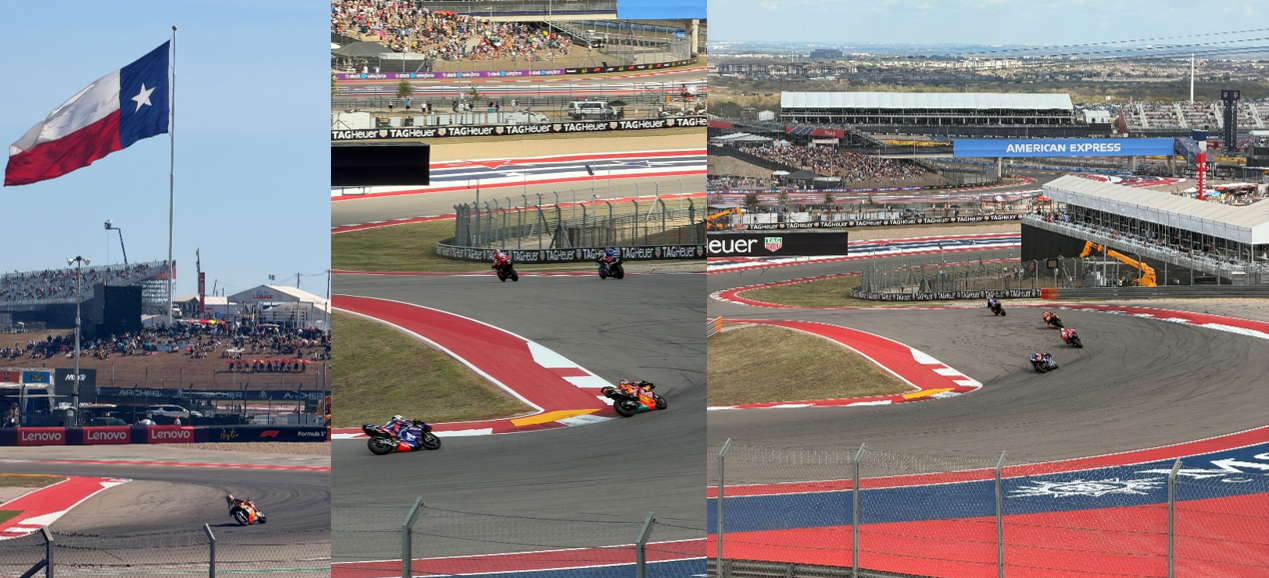
Watching the Screens Versus Watching the Track
One of the more interesting technical observations from the weekend was how far behind the action appeared on the trackside screens and TV broadcast.
My impression was that the trackside screens were approximately five seconds behind the live action, while the Apple TV+ broadcast was roughly 30 seconds behind.
When you’re physically at the circuit, your view of the track is limited by where you’re sitting. You can watch the action directly in front of you, but the screens help you follow what’s happening around the rest of the circuit. The TV broadcast offers a more complete view, with additional camera angles and race coverage, but it comes with a noticeable delay.
It can be a little confusing trying to follow all three perspectives at once. You’re watching one section of the track in real time, checking the screens to see what’s happening elsewhere, and potentially hearing or seeing something on the broadcast that hasn’t happened yet from your perspective. I found myself having to decide which version of the action to pay attention to. And then there were the radio broadcasts for in-person fans! There were so many different ways to follow the race.
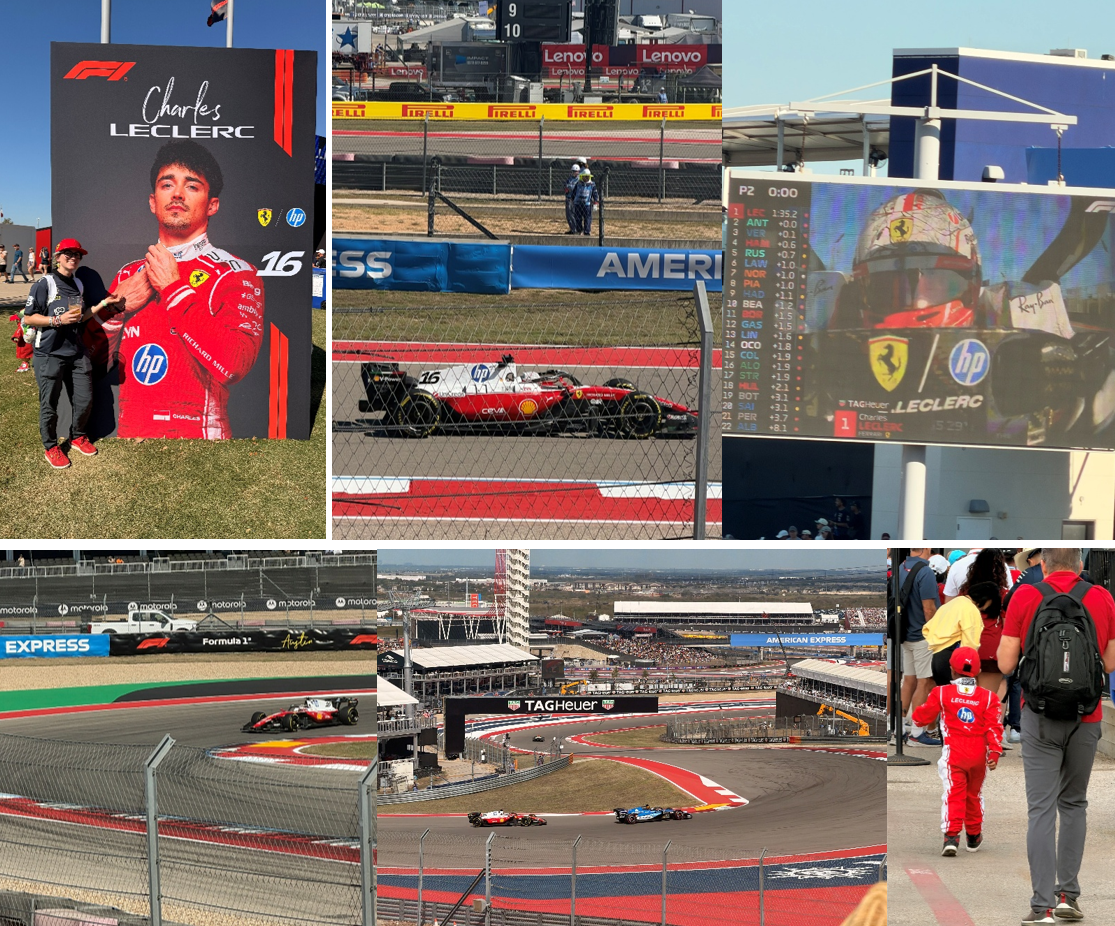
The Fan Community: Watching at Home vs. Being There
I didn’t feel like I was immersed in a particularly energetic crowd. There were moments when the cheers were coordinated, but overall, the atmosphere was quieter than I expected. People stood up and cheered at the start and finish of the race and during key moments, but considering this was a major sporting event lasting more than 90 minutes, I expected to feel more of that collective excitement.
Most of the time, I was more aware of the crowd because of how close everyone was sitting, the conversations happening around me, and the seemingly endless parade of people getting up to grab drinks, buy snacks, or use the restrooms. There were thousands of people around, but I didn’t always feel like I was part of a huge, unified crowd.
The atmosphere wasn’t necessarily bad. It was just different from what I had imagined a Formula 1 race would feel like in person. I’d heard the roar of the crowd at Turns 13–15 during Mexican Grand Prix broadcasts and seen the sea of Ferrari red on TV, so I expected a little more of that collective energy at COTA.
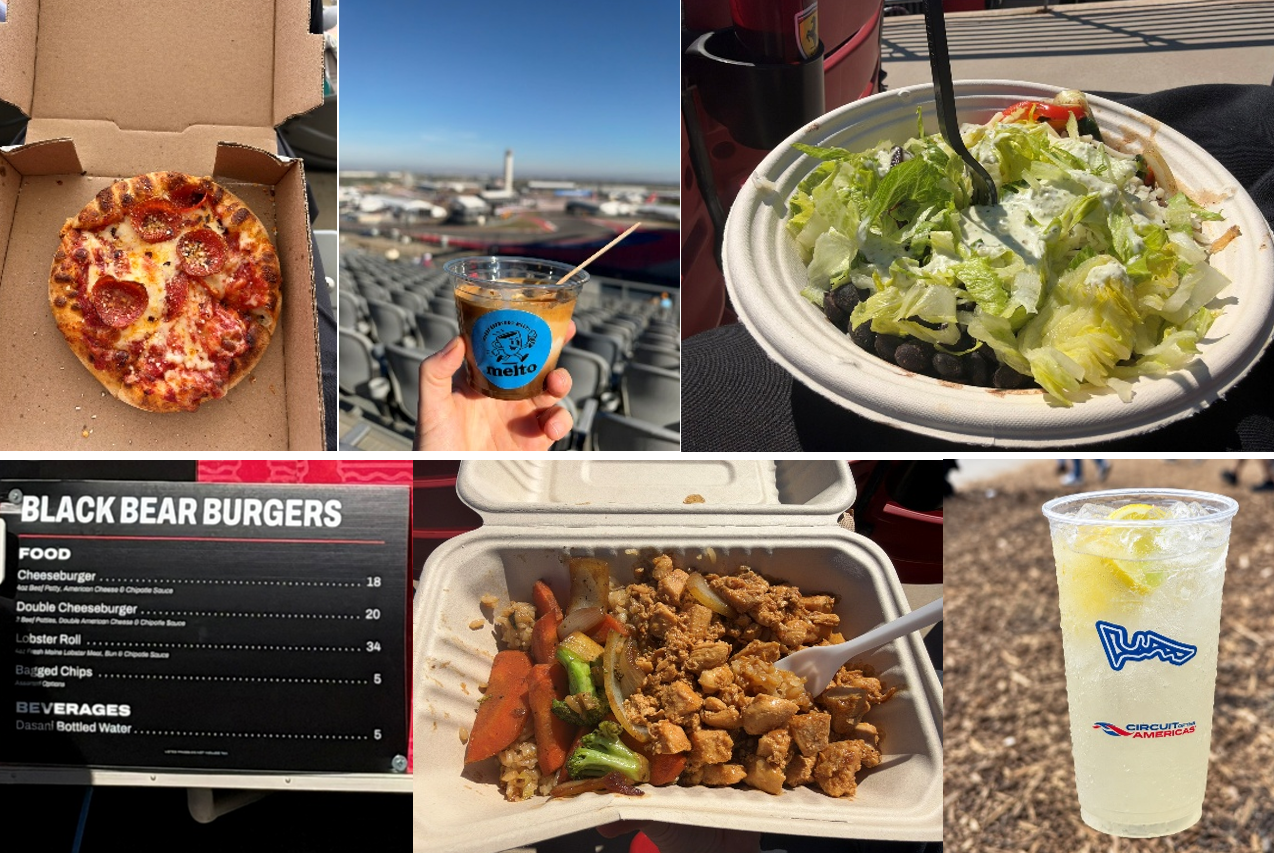
Food Prices: Budget for an Event Weekend
| Day | Recorded food and drinks |
| Friday | $82.75 (chicken fried rice, beef bowl, 2 lemonades) |
| Saturday | $81.60 (affogato, 2 burgers, 1 lemonade) |
| Sunday | $53.21 (2 personal pizzas, 1 lemonade) |
| Three-day total | $217.56 |
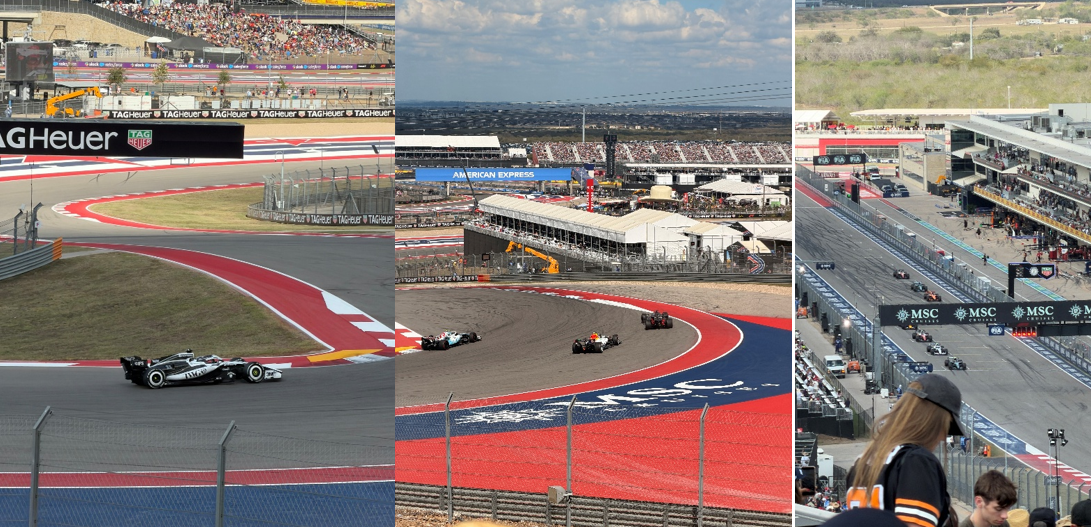
Food at the circuit wasn’t cheap, but it didn’t feel wildly out of line with other sports venues or concert halls. I tipped approximately 10%, and the amounts above reflect the food total plus tax and tip.
My favorite food item: Does affogato count? It was delicious and perfectly sized.
My least favorite food item: The chicken fried rice. It was too salty and tasted like a reheated frozen meal.
My favorite drink: The OG lemonade. There’s a reason we bought it every day. We tried the strawberry lemonade once, and it wasn’t as good. Though they added a lot of ice, and with the physical lemon in the cup, roughly half the contents were liquid and half were ice and lemon, we couldn’t help going back every day for another.
You’ll notice we spent $0 on water. There were water refill stations throughout the venue. Although the official map showed only four locations, we found that refill stations were more frequent and not always where the map indicated.
COTA’s event rules restricted outside beverages, with exceptions and conditions specified by the venue. We brought two empty plastic bottles to refill on Friday. On Saturday and Sunday, we arrived with them already filled with ice and water. We didn’t have any issues with security.
We brought only ginger chews on Friday, but packed several protein-rich and fruit snacks on Saturday and Sunday. Security didn’t say anything about them.
We also saw people with small coolers, outside meals, and beer, despite some of these items appearing on the prohibited-items list. A beer at the bar stations cost $15.
Bringing snacks meant we could supplement the one meal and one drink we bought at the circuit each day. That helped us get through the 10 to 11 hours we spent there without buying every snack on-site and spending even more on overpriced food.
Almost 18 Miles of Walking
| Day | Steps | Recorded distance |
| Friday | 16,081 | 6.07 miles |
| Saturday | 17,573 | 6.73 miles |
| Sunday | 13,282 | 5.13 miles |
| Total | 46,936 | 17.93 miles |
That walking included much more than exploring the circuit. It also included the walks between transportation, security, grandstands, food areas, tram stops, and exits, along with wandering around the different COTA areas between on-track sessions.
There was a noticeable lack of shade, cooling fans, and air-conditioned spaces available to general-admission spectators and those using the standard grandstands. Announcements reminded us to stay hydrated and seek shade, but finding shade was often difficult unless you had access to a paid hospitality area. The advice to stay cool didn’t always match the facilities available to do so.
Transportation: Getting To and From COTA
Transportation was one of the biggest factors in our weekend experience, second only to choosing where to sit each day.
We used the Expo Center shuttle all three days and parked there for free. A three-day shuttle pass cost $103 per person. Getting to COTA each morning was relatively efficient once we boarded. The bus ride took approximately 25 to 30 minutes, although we also had to factor in shuttle boarding, the walk to security, security lines, and the trek to our seats.
Getting back was another story. We waited in line for the school-bus shuttles every evening, and traffic leaving the circuit was stop-and-go. The ride back to the Expo Center took about 40 to 45 minutes each day. I can only imagine how long it took to leave in a personal vehicle, although we didn’t experience the parking-lot traffic ourselves. On-site parking was also extremely expensive, so we never seriously considered it.
Sunday was the most difficult day to leave, as we’d expected for race day. COTA reported an estimated 467,000 attendees across the three-day weekend. We also heard that only two trams were operating Saturday evening, compared with four in the morning, although we couldn’t independently verify those numbers.
Getting to the Shuttle: It Depends on Where You Sit
Our route back to the shuttle varied considerably depending on our seats.
On Friday, we sat near an exit leading toward the shuttle pickup. Even so, it took about 12 to 14 minutes to walk there, followed by a wait to board.
On Saturday, we sat at Turn 1, and on Sunday, we were in the grandstands. From those locations, we had to walk to a tram stop and ride toward the exit, or face a much longer walk around and through the circuit. Walking 30 to 40 minutes might be manageable earlier in the day, but it was much less appealing when thousands of tired spectators were all trying to leave at once. By Sunday, our feet were tired, too!
Saturday: Tram Lines and Confusing Crowd Management
Saturday evening, we waited almost an hour in the tram line at Turn 1. Traffic nearby was crawling, with people leaving the circuit at different turns and walking along the road, further obstructing vehicle movement.
We also saw rental golf carts picking up people who flagged them down from farther back in the line. The drivers told passengers they were working for tips. From what we observed, they weren’t consistently collecting passengers from the front of the queue or prioritizing people waiting in the adjacent ADA line. We couldn’t tell what instructions the drivers had been given, but the arrangement seemed questionable. People who had been waiting in line were being passed over while others managed to get rides by flagging down a cart.
There was no obvious crossing guard where we exited at Turn 1, and signage directing people to the tram queue was unclear. We stood in the sun for around 45 minutes without shade, bathrooms, or water nearby.
Then a tram making a turnaround approached. While it waited for traffic to clear before continuing toward the pickup point, people from the middle and back of the line rushed toward the vehicle and boarded. This cut off people at the front who had been waiting the longest.
It was frustrating to watch people lose their place because the boarding process wasn’t clear. The experience highlighted a broader crowd-management problem. When thousands of tired spectators are trying to leave at once, unclear queues and limited staff direction create confusion and conflict. Clear lines, visible signs, and staff directing people was necessary and lacking.
Sunday: The Longest Trip Back
We knew leaving after Sunday’s race would be chaotic, but the experience was worse than expected.
After the award ceremony, we found a few remaining seats on two trams waiting outside the grandstand exit around 5 p.m. One volunteer told us the tram might sit there for at least an hour before departing. Fortunately, it started moving at 5:35 p.m.
It soon stopped near the end of the parking area. We were told the park had been opened to pedestrian traffic and that walking through would take only about 10 minutes. We got off around 5:45 p.m. and continued on foot.
The closest entrance wouldn’t let us through, so we went around to the main grandstand entrance and continued through COTALAND. The walk from the tram stop to the shuttle queue took about 26 minutes.
To our dismay, the shuttle line was enormous. Its end stretched roughly two-thirds of the way from the shuttle stop toward the entrance of the park.
At 6:25 p.m., we left the line to try getting a rideshare. The quoted priority pickup price of $68 didn’t seem unreasonable compared with what we feared the shuttle wait might be. However, drivers didn’t appear willing to accept rides below a certain price threshold, and we saw estimates around $160. Rideshare didn’t look like a practical alternative, so we returned to the shuttle queue at 6:50 p.m.
We finally boarded at 7:48 p.m. From first joining the queue at 6:16 p.m. to boarding, 92 minutes had passed. That included our 25-minute rideshare detour, but even without it, we spent more than an hour waiting in the shuttle line.
Friday transportation timeline
- 8:00 a.m. — Arrived at Expo Center
- 8:30 a.m. — Shuttle loading began
- 8:35 a.m. — Bus departed
- 9:00 a.m. — Arrived at COTA
- 9:25 a.m. — Cleared Amex security
- 9:40 a.m. — Reached our seats at Turn 15
- 6:30 p.m. — Left COTA for shuttle pickup
- 7:00 p.m. — Bus departed COTA
- 7:40 p.m. — Arrived at Expo Center
Saturday transportation timeline
- 7:05 a.m. — Arrived at Expo Center
- 7:30 a.m. — Began boarding the shuttle
- 7:45 a.m. — Bus departed
- 8:12 a.m. — Arrived at COTA
- 8:36 a.m. — Approximate arrival at the main entrance after the 24-minute walk
- 8:45 a.m. — Cleared Amex security
- 9:05 a.m. — Reached Turn 1 seats
- 5:15 p.m. — Started waiting for the tram
- 6:15 p.m. — Boarded the tram
- 6:35 p.m. — Waited for the shuttle
- 6:45 p.m. — Boarded the shuttle
- 7:30 p.m. — Arrived at Expo Center
Sunday transportation timeline
- 8:17 a.m. — Arrived at Expo Center
- 8:25 a.m. — Boarded shuttle
- 8:56 a.m. — Arrived at COTA
- 9:10 a.m. — Waited for the tram
- 9:15 a.m. — Boarded the tram
- 9:50 a.m. — Reached the grandstands
- 5:00 p.m. — Started walking to the tram after the race
- 5:35 p.m. — Tram started moving
- 5:50 p.m. — Got off the tram and walked through the park
- 6:16 p.m. — Approximate arrival at the shuttle line
- 6:25 p.m. — Left the line to consider rideshare
- 6:50 p.m. — Returned to the back of the shuttle line
- 7:48 p.m. — Boarded shuttle
- 8:35 p.m. — Arrived at Expo Center
People Getting in the Way of a Good Time
Some of the most frustrating parts of the weekend wasn’t just with COTA itself but also with how some spectators behaved around everyone else.
One thing I noticed about the grandstand seating was how much the view could depend on the people sitting or standing around you. When spectators stood up during exciting moments, it was understandable, but it could make it difficult to follow the action from behind them.
Even when everyone was seated, I sometimes had trouble seeing over the rows in front of me. The seats are stacked, but as someone on the shorter side, I occasionally found that people’s heads were directly in my sightline. I had expected a more open view of the turns, but in reality, my view was sometimes more limited than anticipated.
Smoking was another frustrating part of the crowd experience. I saw people smoking in several areas of the venue each day, including prohibited areas where hundreds of other spectators were nearby. There weren’t many people doing it, but the lack of apparent enforcement was noticeable.
Food areas had their own share of etiquette problems. We noticed people occupying tables or leaving belongings, including ‘ghost’ hats, to hold spaces while they were away or waiting in line for their food. Taking a short break from a table is one thing, but effectively reserving an entire space while everyone else is looking for somewhere to sit is frustrating. COTA could help by providing more seating.
Venue Issues
Shade is something we considered when choosing seats and why we were far up in the grandstands on Sunday (where it’s covered!). You’re outside for most of the day, and if your section is exposed, you’re sitting in the sun for hours. We actually got lucky with cooler temperatures and some cloud cover this race weekend, but it was still hot. This is Texas, after all!
General admission is a little different because people can choose their own viewing spots and adjust where they sit or stand. We noticed plenty of people using umbrellas on the hill or using the bridges to shield them from the sun.
On Friday, we encountered porta potties that had run out of toilet paper and had no water for hand washing before midday. The designated water station near Turn 15 was empty.
We also noticed problems with signage and pedestrian routes. At times, people were directed through busy areas without clear instructions, leaving them walking along roads, entering the wrong queue, or having to backtrack.
Free Things, Paid Activities and Shopping
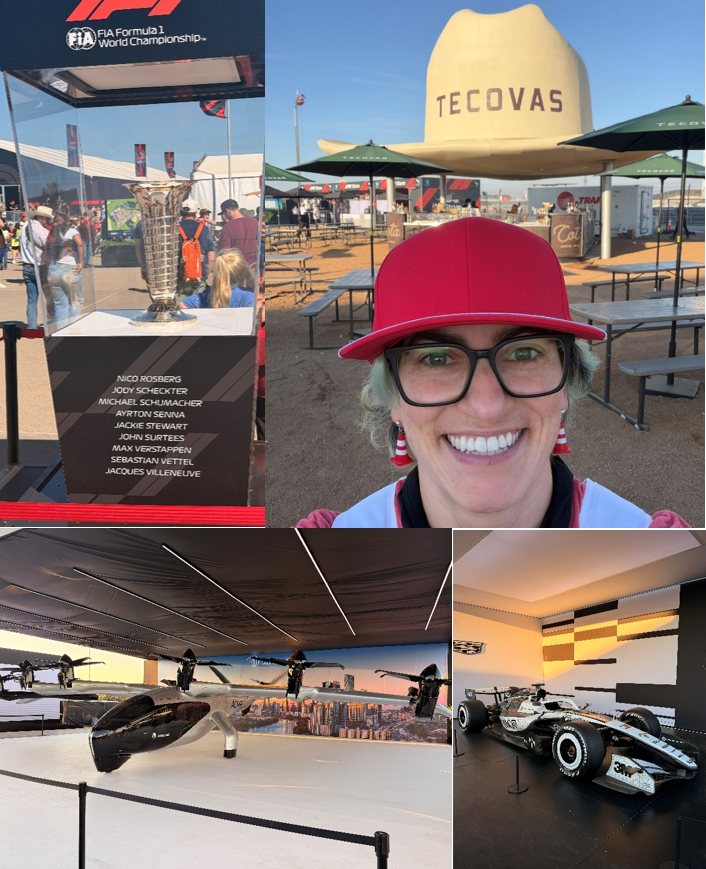
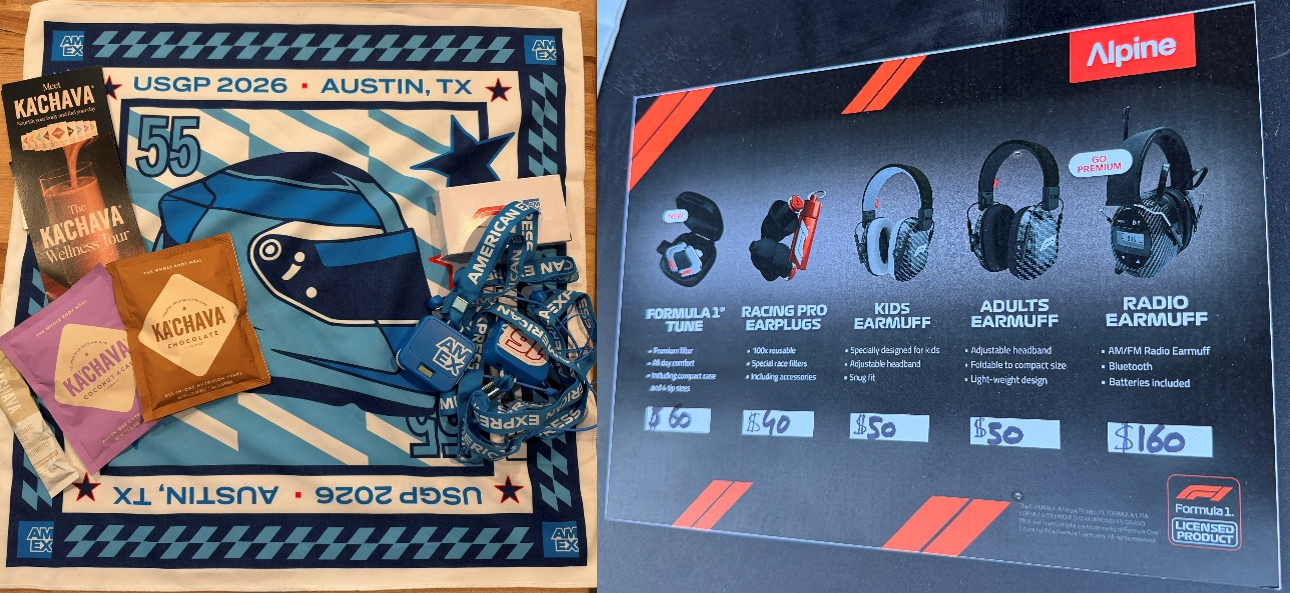
We only bought one souvenir each: the Hot Wheels Ferrari F1 cars. We did, however, manage to enjoy quite a few free activities and pick up some freebies along the way:
- Jon went downtown to the team activations Thursday
- F1 Blast Lane (wind tunnel experience)
- Grabbed the free race radios Friday and Saturday with Amex
- Grabbed a free scarf and keychains from Amex near the F1 Academy zone
- Snagged a few free smoothies and some to go at the Ka’Chava booth
There were also several paid activities around the circuit, but we passed on those and spent our time between on-track events exploring instead. There was plenty to see and do without spending extra money.
One of my favorite ways to connect with an event is to immerse myself in its world before I even arrive. I like to do something creative, read books, watch movies, and generally find ways to build excitement around the experience. Of course, that also includes dressing for the occasion! Jon and I had a different coordinated outfit for each day of the weekend.
Naturally, I rewatched F1 before the race weekend! I also read a few Formula 1-related books: Cross the Line (Lights Out, #1) by Simone Soltani, Not So Fast by Karen Booth, and Formula 1: Stories and Legends: Epic Rivalries, Unforgettable Stories, and the Curiosities That Shaped F1 Racing by Rafael Moreno Chacón.
For the creative part, I made a custom DIY Grogu dressed as Charles Leclerc. My little Baby Tifosi got plenty of attention, with several people asking to take his picture. I also managed to give one of my crocheted bananas to someone in a banana outfit!
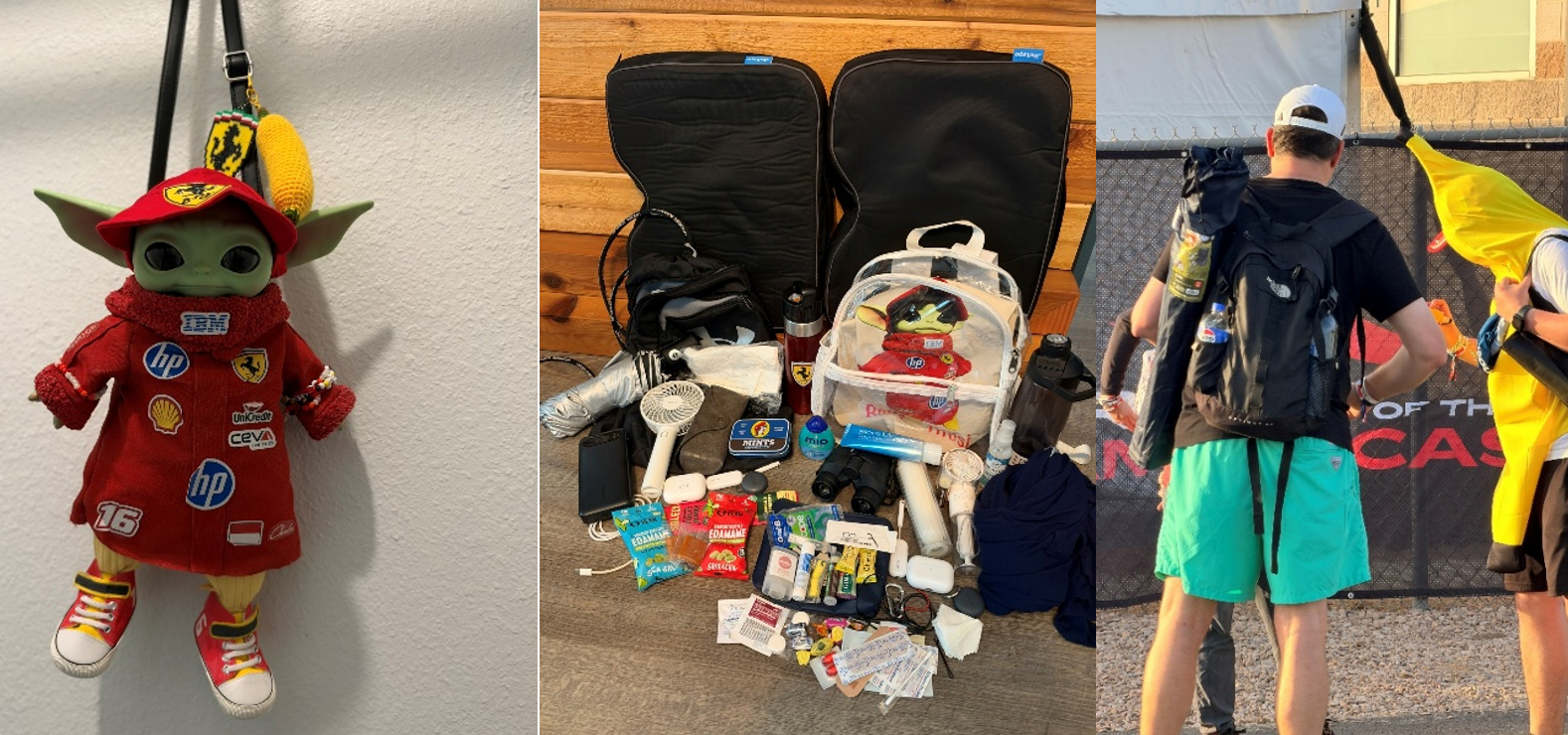
What we brought to a COTA F1 Weekend
- Easy to wear backpack
- Comfortable walking shoes that have already been tested on long days.
- Sunscreen, a UV blocking umbrella, portable fan, a hat, and a scarf/buff to block the sun from our necks.
- A permitted water bottle with electrolyte drops
- Snacks
- sunglasses
- A portable charger and extra cord, airfly for the race radios to connect to our Airpods
- Binoculars
- Loop earplugs
- Hand sanitizer
- Thin long sleeve (didn’t need this at all)
- Seat cushions for the harder stadium seats
- A mini first aid kit with some extra goodies like Tylenol
- Something fun to show off my team allegiance! My Baby Tifosi and some giveaway crocheted bananas, fuse beads, and friendship bracelets

